22 may 2026
at 2:22 pm
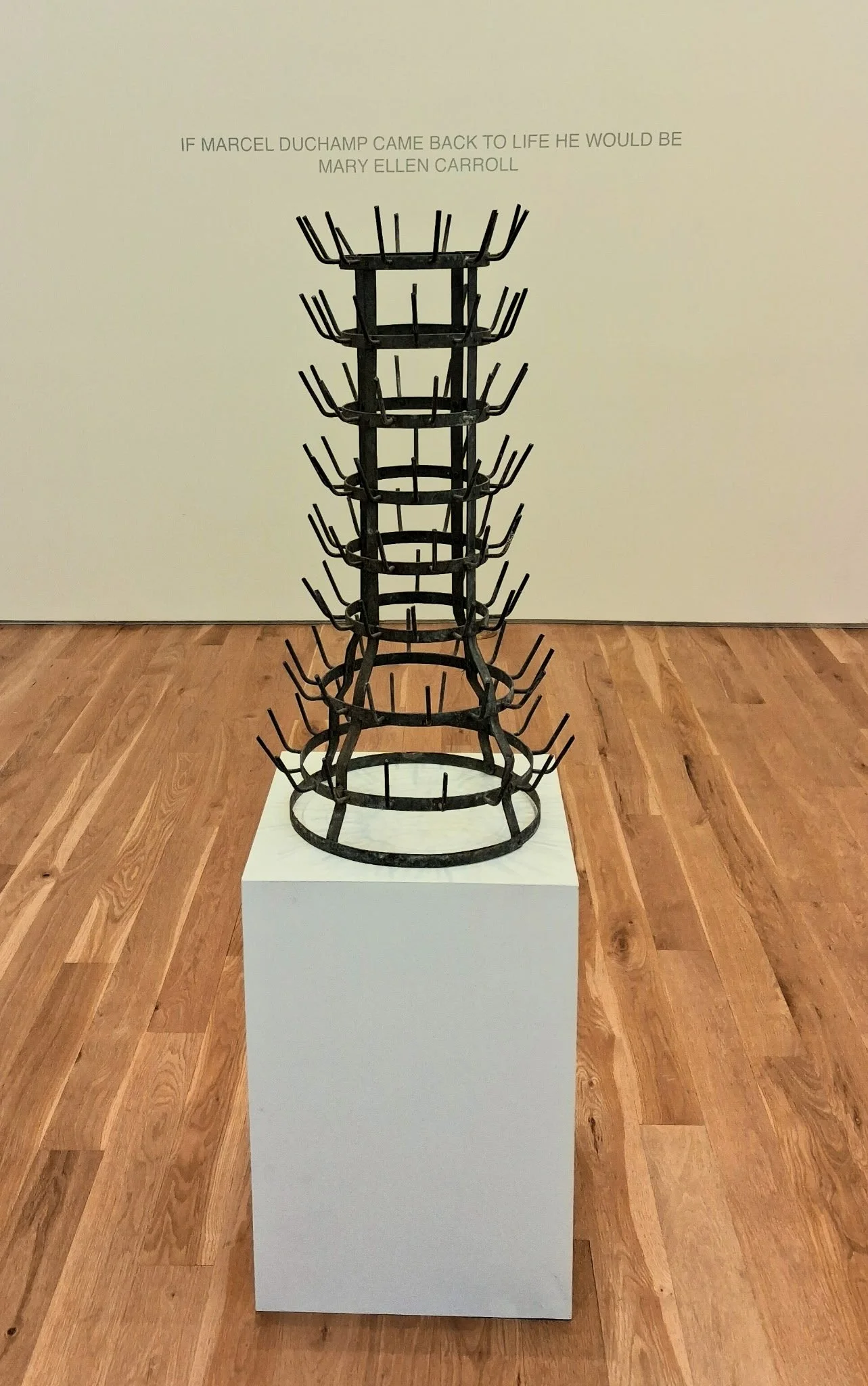
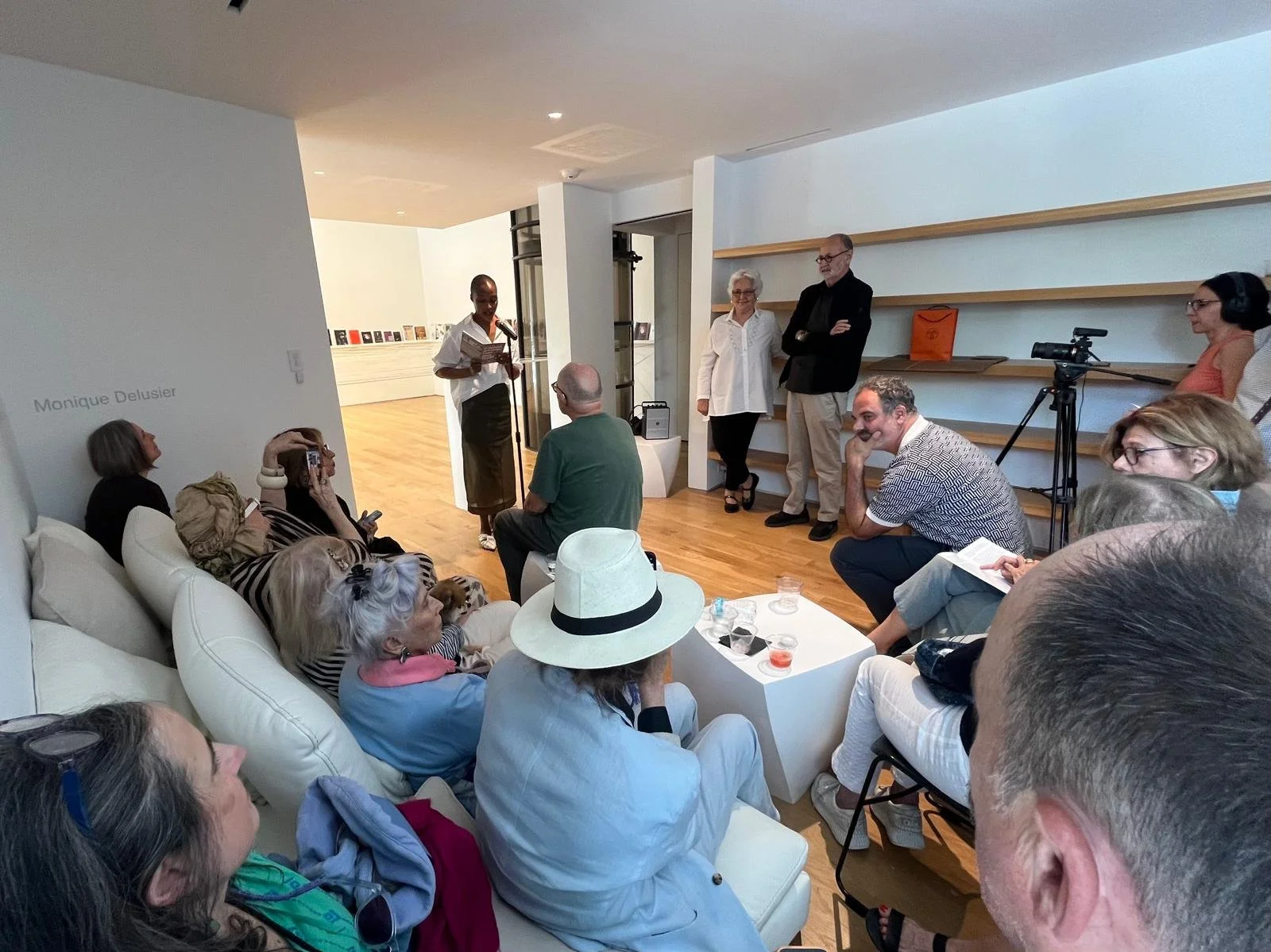
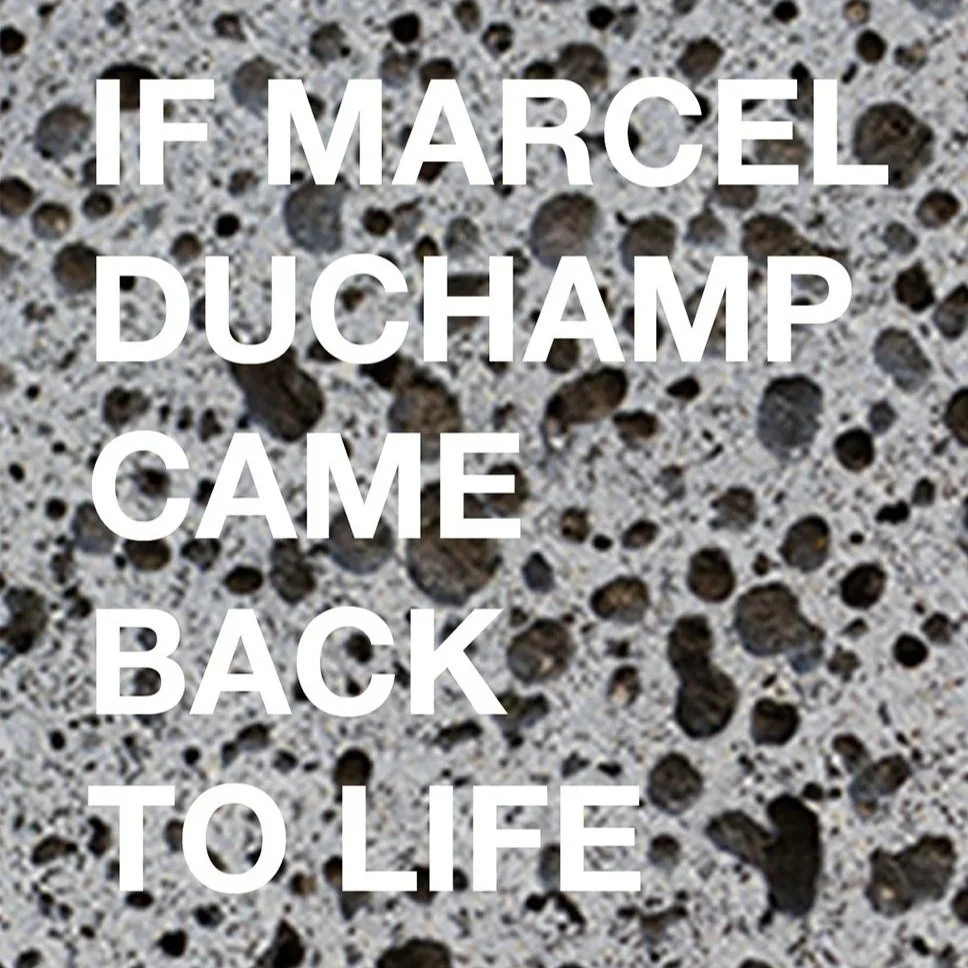
IF MARCEL DUCHAMP CAME BACK TO LIFE
HE WOULD BE MEC
Curated by Monique Delusier
With Alecia Harris
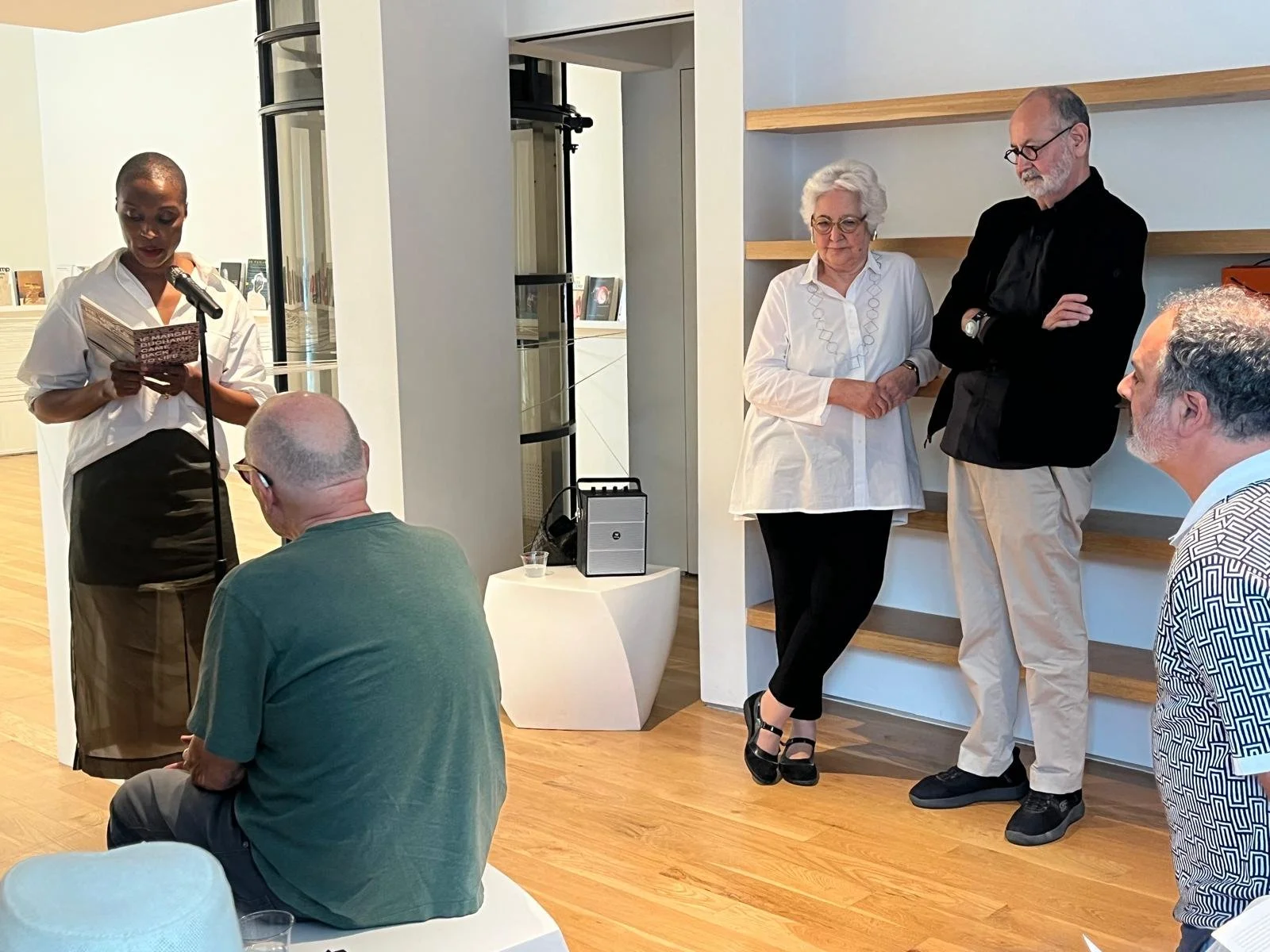
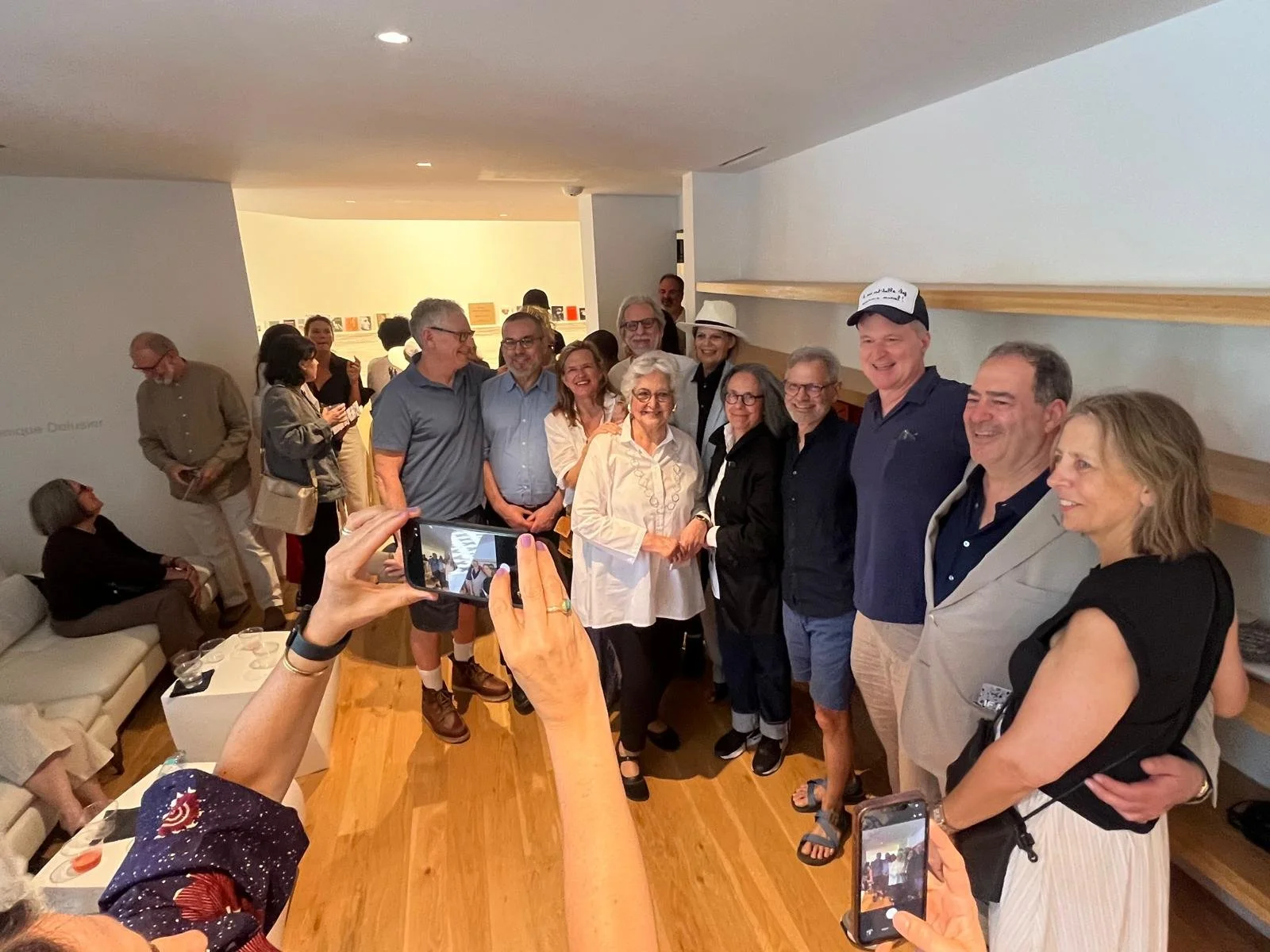
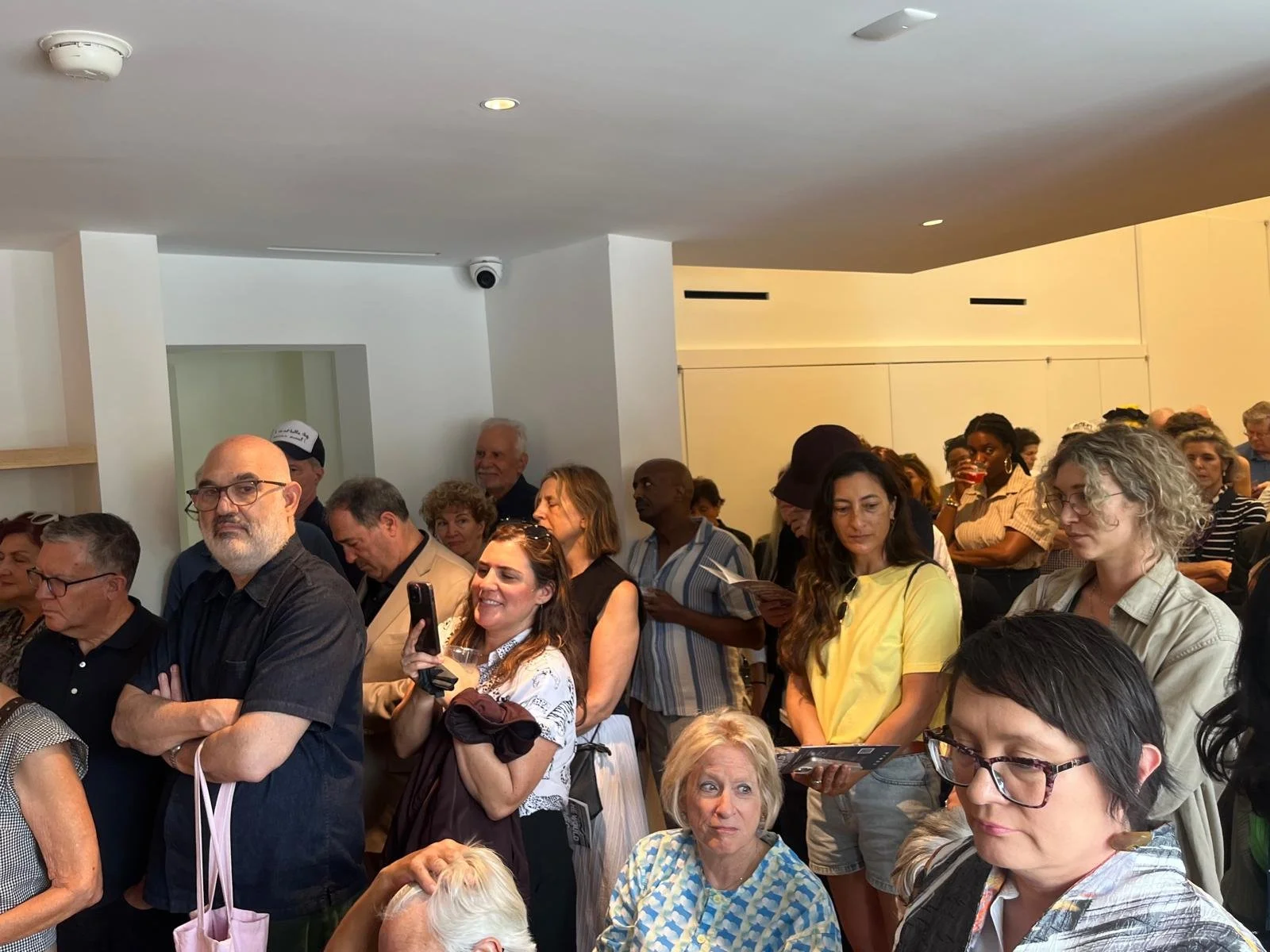
My name is Monique Delusier. I am the original curator of this exhibition honoring Mary Ellen Carroll on her first retrospective at the Museum of Contemporary Arts in Houston which opened yesterday, May 21, 2026. The title of this exhibition might surprise you, since if anyone is familiar of Marcel Duchamp’s beliefs, as a sworn atheist, he is said to have rejected any chance of being reincarnated. However, the afterlife, or the art works’ after effects always brings us surprises, don’t they?
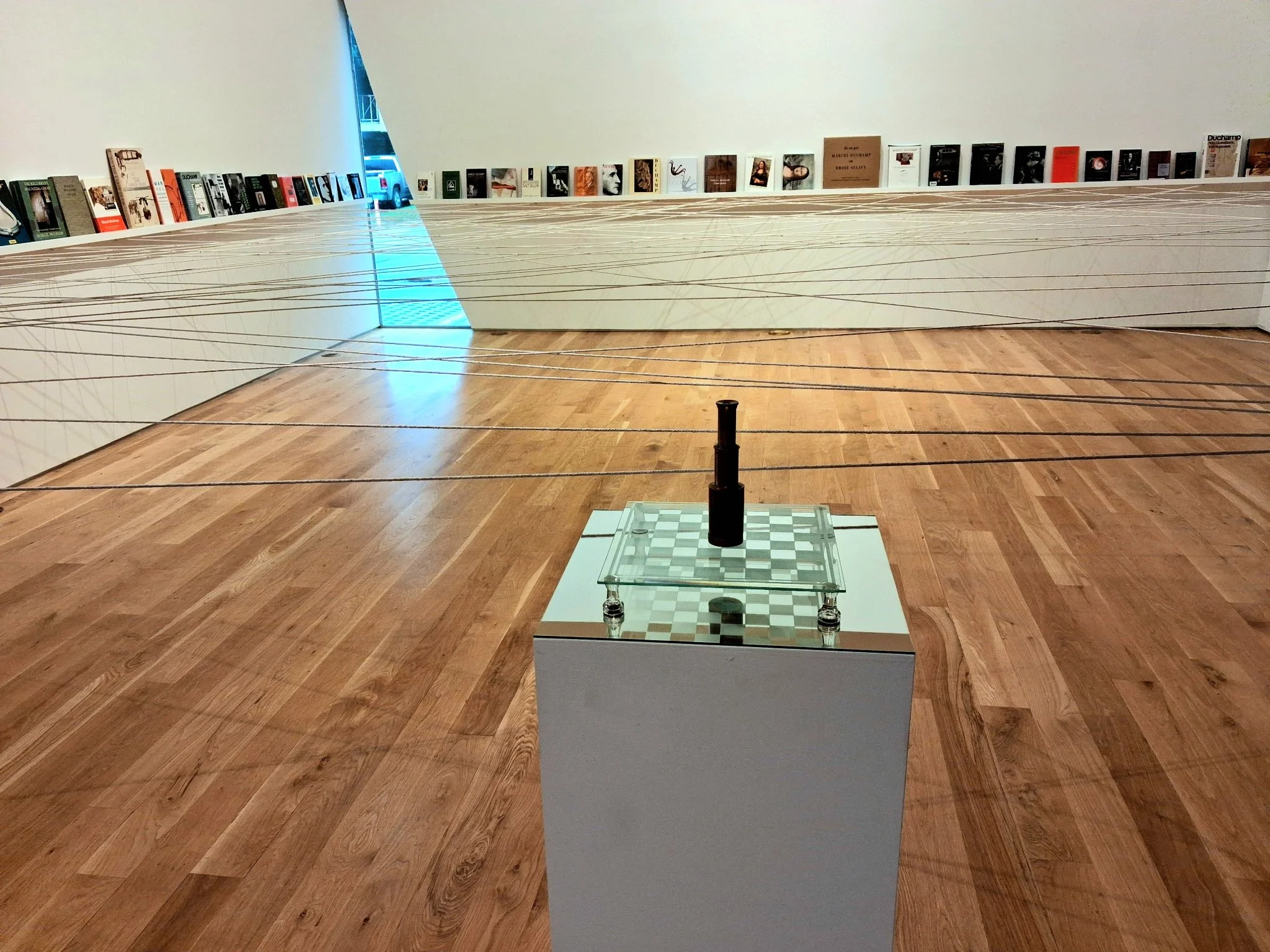
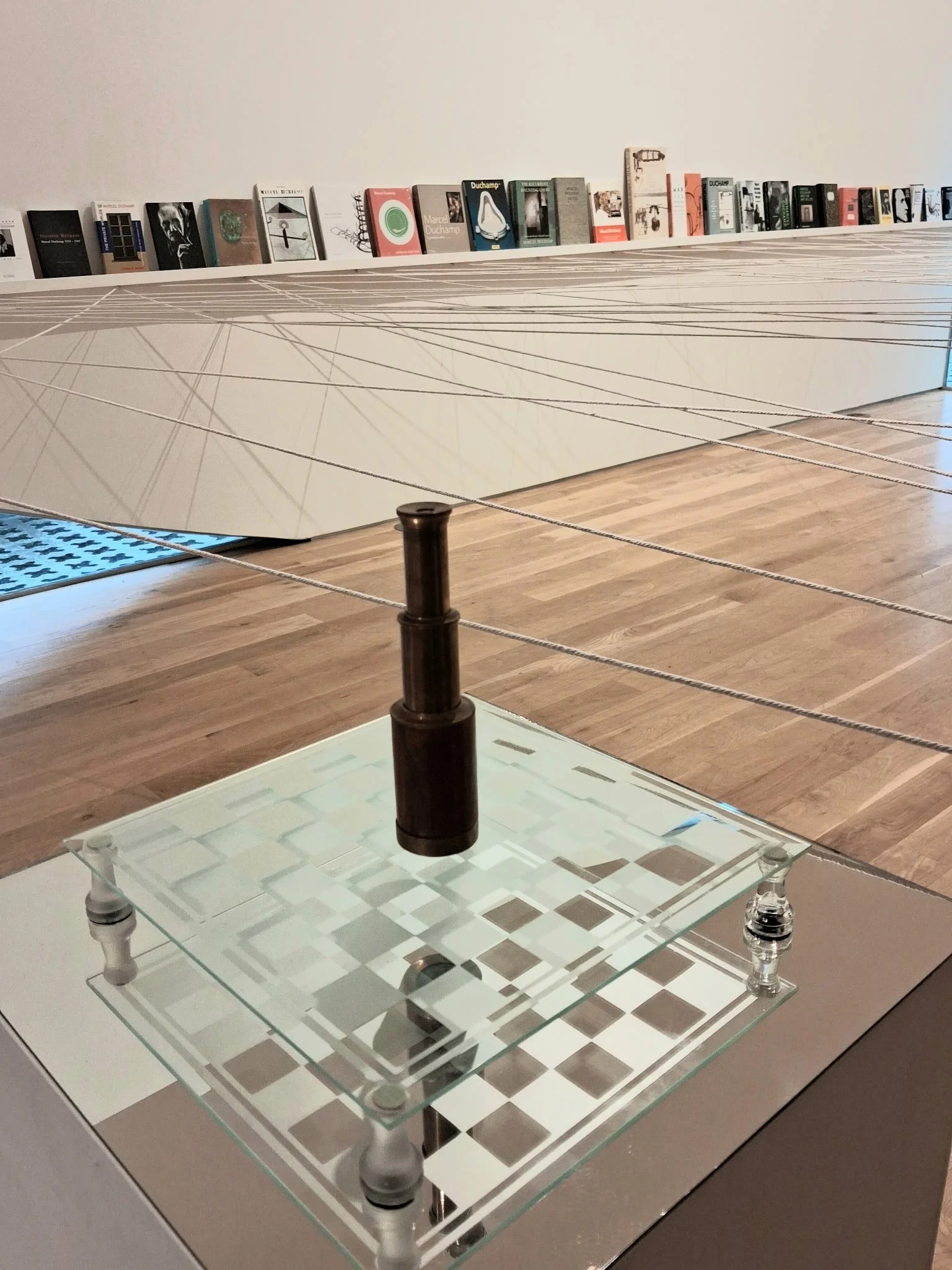
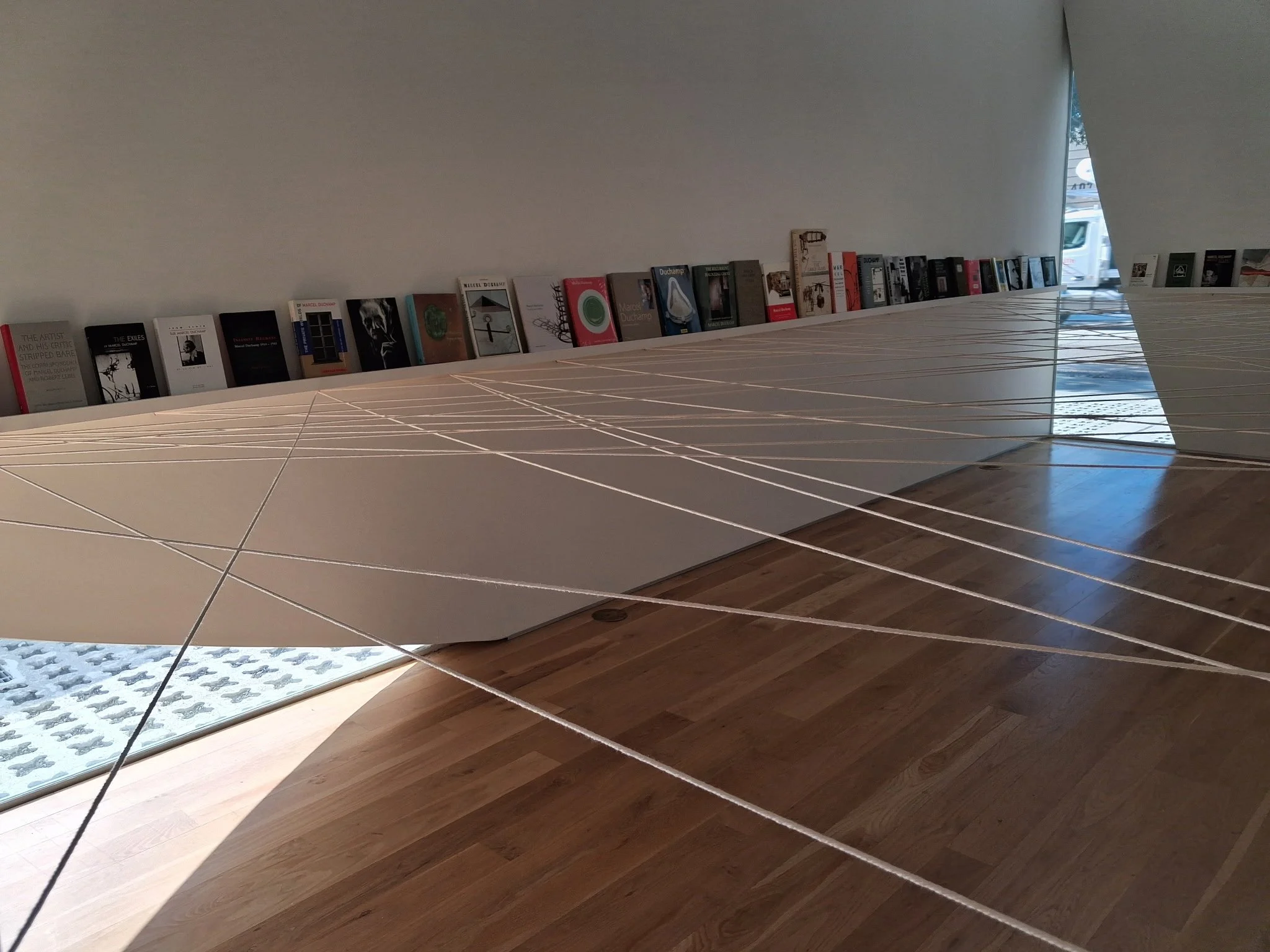
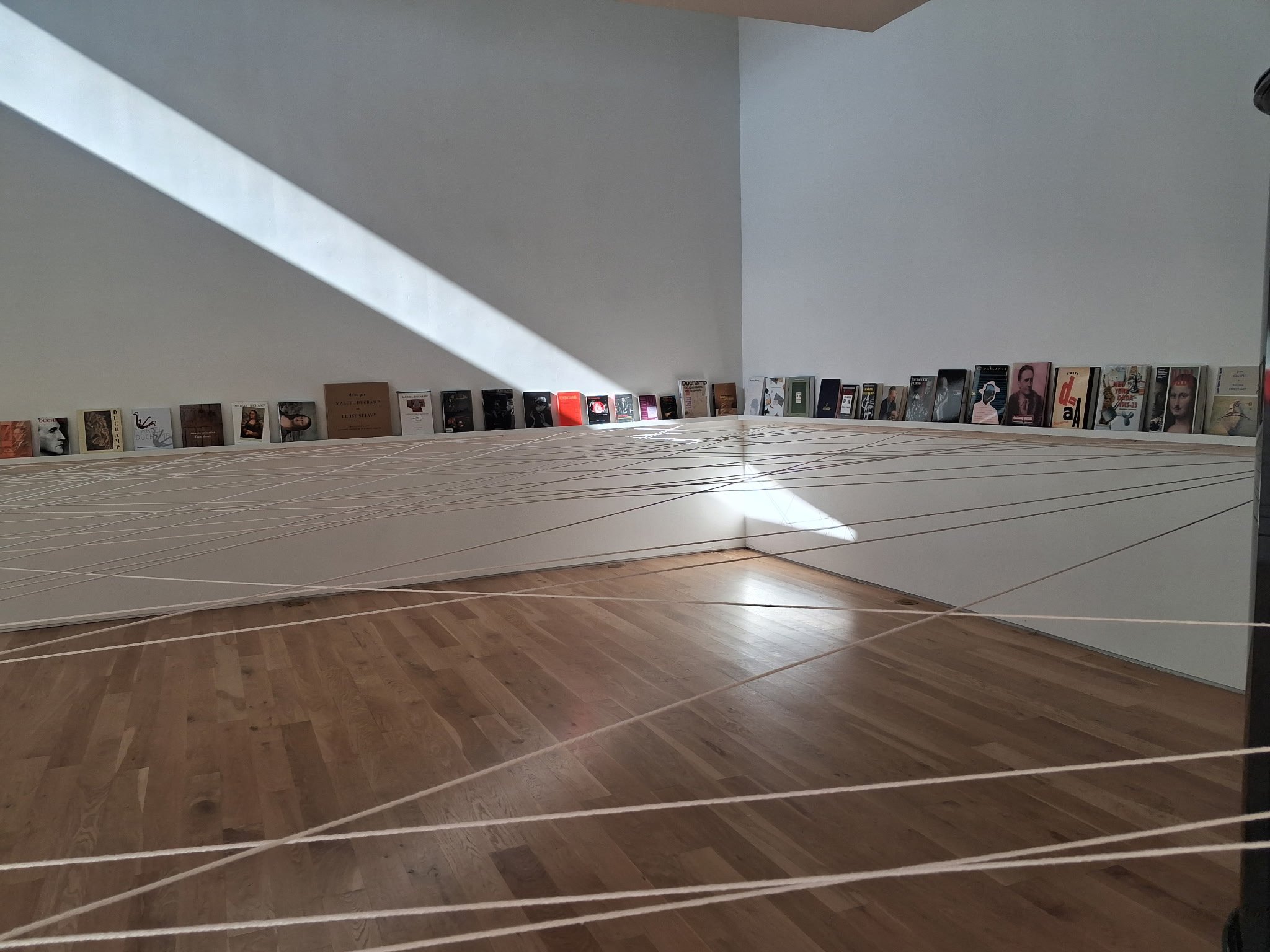
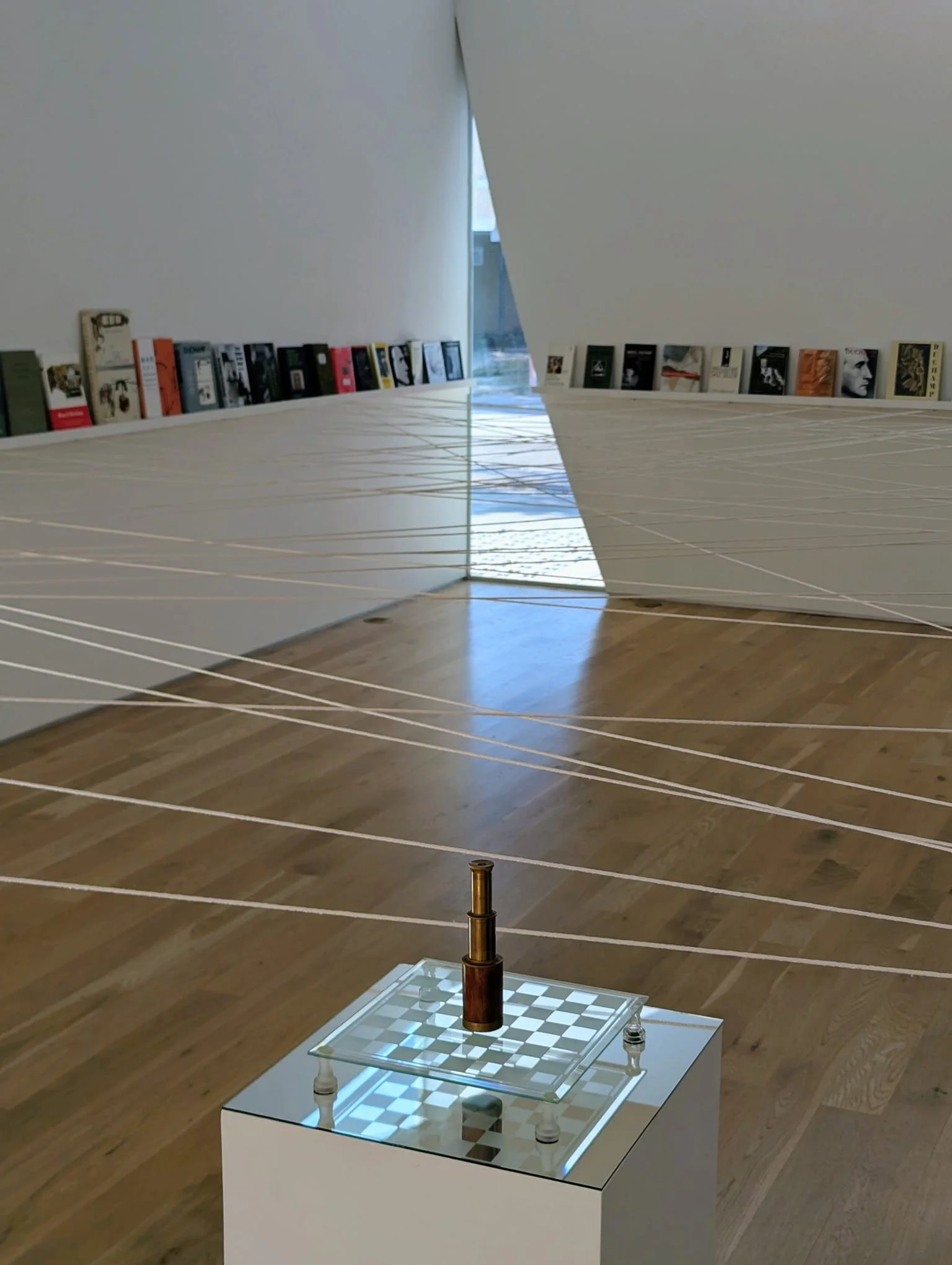
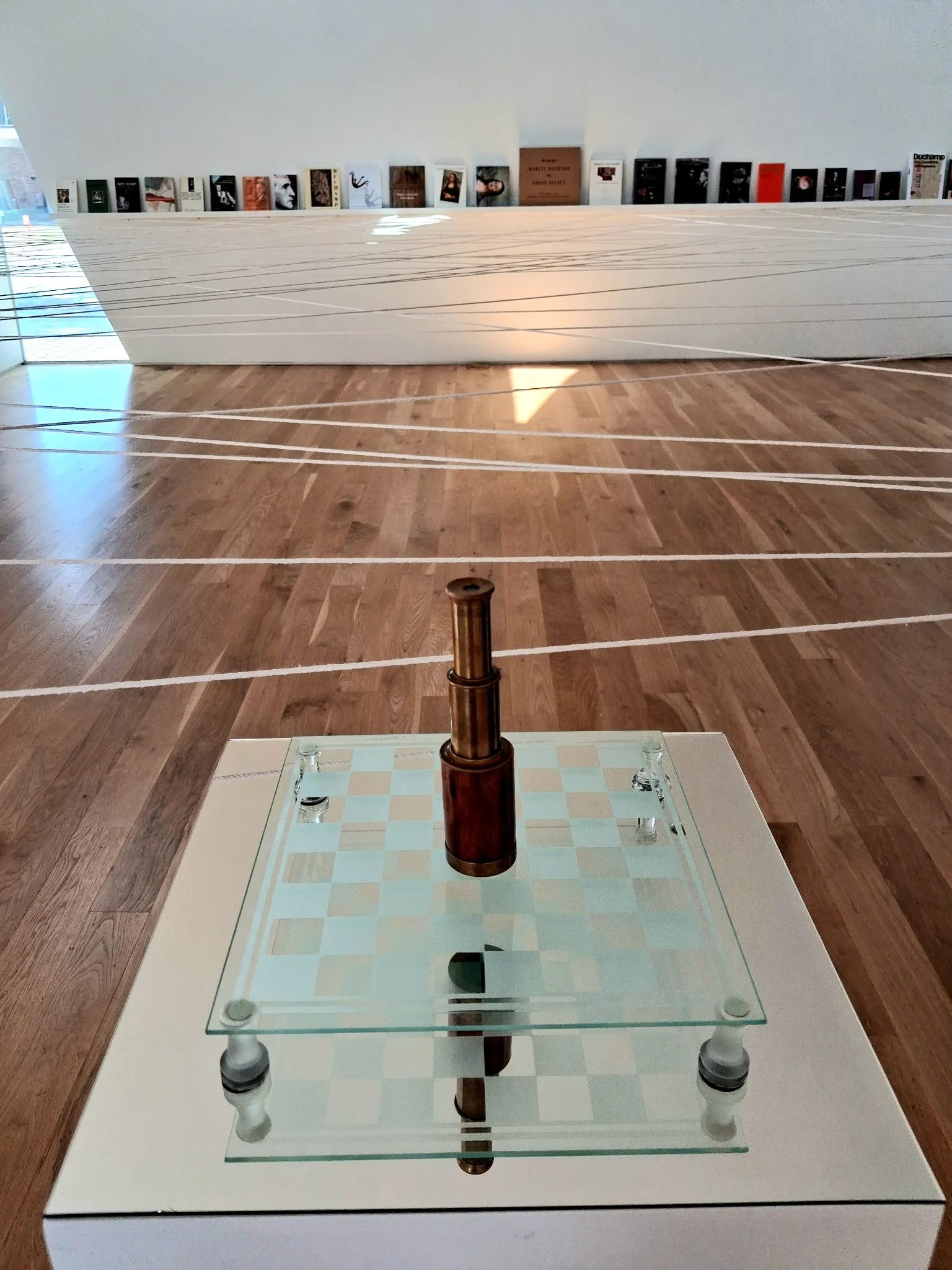
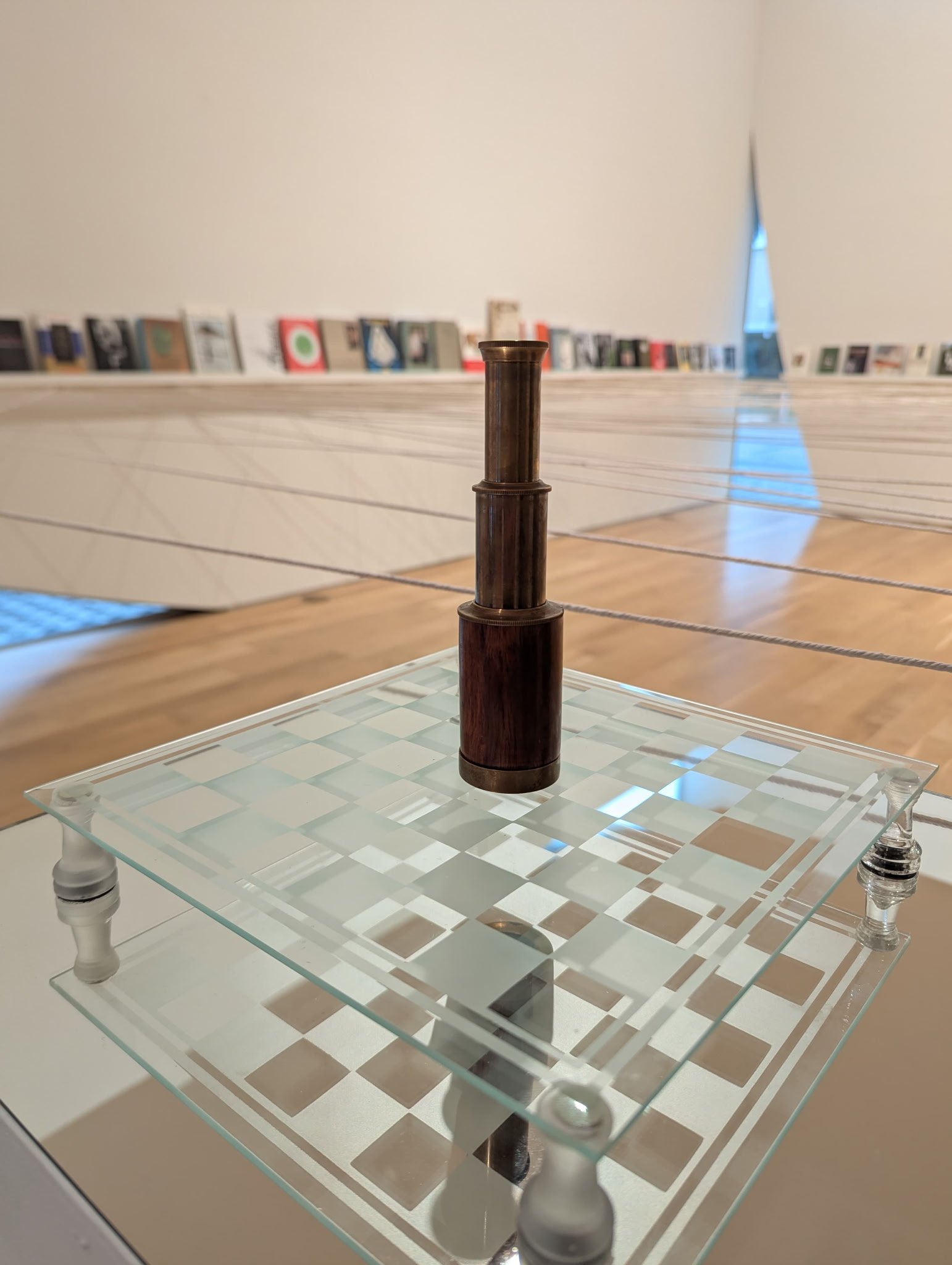
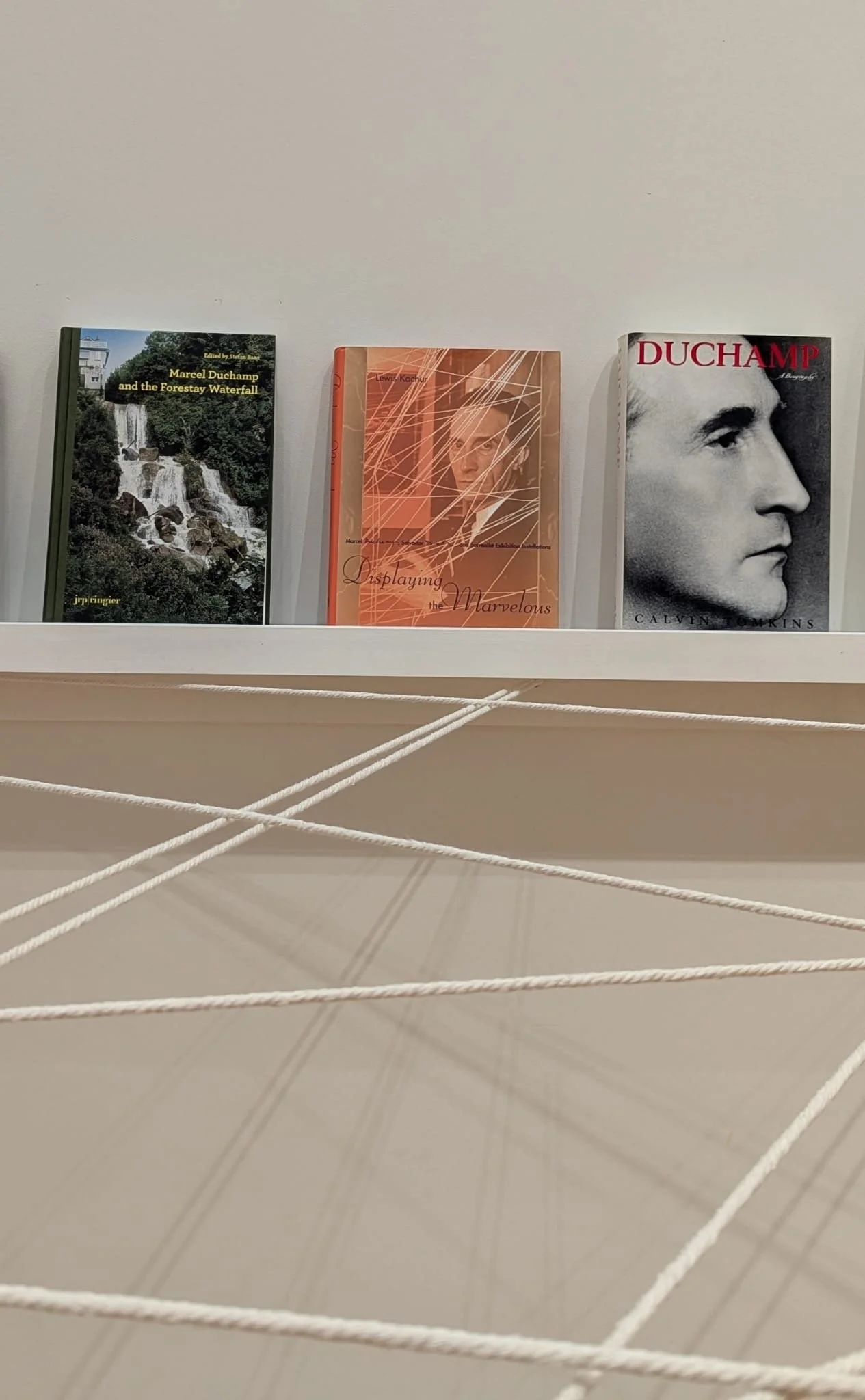
Well, I must tell you how my story began. I met Mary Ellen Carroll on my first trip to Buenos Aires, the first week of March 2006. I went to Buenos Aires to celebrate the publication of an enticing book called Maria con Marcel. Duchamp en los Tropicos: Maria with Marcel. Duchamp in the Tropics by a noted literary scholar, Raul Antelo, a professor, who, by the way, taught Brazilian literature at Yale, Duke and the University of Texas in Austin. Raul and I have shared a passion for Marcel Duchamp since 1968, the year Duchamp died, even though we were quite aware of his work since his first retrospective at the Pasadena Art Museum in 1963 curated by Walter Hopps, a legendary figure I am sure you are all very familiar with, since he directed the Menil Collection Museum from 1987 until 1989. I think this book collection by, with and about Marcel Duchamp, as he would say: (even), will certainly attest to my obsessive interest in collecting hundreds of primary and secondary publications by and about him. I am fascinated by the flow of literature pondering on such a limited production of art objects, disregarding Duchamp’s subtle rhizomatic and provocative strikes dismounting our western cultural belief system. This exhibition is as impenetrable as Duchamp’s October 1942, 1.2-mile twine installation at the First Papers of Surrealism exhibition organized by Andre Breton at the Whitelaw Reid Mansion on Madison Avenue in NYC. You can read the book titles exhibited here, using the monocular Tower of Babel, symbolically set on a chess board, evoking the origin of chess in the ancient gridded city of Nineveh, Babylonia: a city similarly gridded and flanked by two rivers as NYC, the city in which Marcel Duchamp not only spent myriad hours playing chess, but greatly contributed to turn it into the art center of Modern times.
It amazes me, how much of the literature you see displayed here, is stuck to Duchamp’s material art works, as embodiments of Duchamp’s thinking. Yet, little attention is paid to what actually generated his anti-retinal, conceptual art.
Having studied at L’ Ecole des Hautes Etudes in Paris, during its most stellar years, I have not escaped the influence of Deleuze, Foucault, Lacan, Irigaray, Derrida… post structuralist and feminist philosophers of our times, followed by a post-post lineage of thinkers, which goes on and on. But, more importantly, today, I am honoring the legacy of the Surrealist master and ethnographer Michel Leiris, key figure in the development of the Musee De L’Homme or the Museum of Anthropology in Paris and author of a self-revealing ethnography, seminal in the field of contemporary anthropology.
Leiris had a profound impact in grounding my own vision of our contemporary global or should I say, “glocal” art world: a more inclusive and broader platform which is based on a study of cultural anthropology. And thus, I can draw important parallels between Mary Ellen Carroll’s and Marcel Duchamp’s art and creative process.
Those who have not pondered on what motivated Duchamp’s famously quoted statements and iconic works, which invariably shocked audiences, should realize that every one of his acts questioned our underlying cultural paradigms. This is not a subject that normally entertains mainstream artists, who might be totally unaware of how their thinking and aesthetic choices are determined by an invisible cultural/political network that restricts their artistic freedom, their thought process and their lives.
Duchamp had the foresight to create works that invariably puzzled the public, because, in fact, those works mirrored taboos, stereotypes, or cultural conventions girding a belief system that rules our society.
So, what instigated Duchamp’s ironic designation of found objects or Ready-mades as art? Ready-mades are ordinary testimonial objects that confront the public with their own cultural biases, when they fetishize functional artifacts from “exotic” cultures, placing them on pedestals, treating them as art! Or as Duchamp stated it once, these are samples of what the future of art could entail, “objects chosen from a Sears Catalogue”! Raul Antelo, in: Maria Con Marcel: Duchamp en los Tropicos writes that during his trip to Buenos Aires in 1918, Duchamp, in fact, takes note of mass-produced products such as a canned sweet treat called “La Gioconda”, or water “Helena”, “Belle Haleine”, “Eau de Violette”, parfum “Reve Rose”... all enticing inspirations.
More importantly, what was the effect of Duchamp’s “retard” or the mysterious hiding of The Large Glass and Etant Donnée from the public’s eyes, other than, an after-effect that turned those works into mythical conundrums, still engaging critics who attempt to decodify them? Weren’t these twos “retards”, his way to counter-act the expected marketing of two masterpieces to consumers?
How about the shock value of body tattoos? Tattoos were a subject discussed in intellectual circles, initiated by Baudelaire, who saw tattoos, make up, or any kind of body adornment, as mankind’s first attempt to clothe the naked body, or rather, a primal sign of humanity’s awareness of artifices that distinguished it from animals. This kind of revealing ethnographic vision is what grounded most of Duchamp’s works and actions. My friend, Raul Antelo narrates in his book, that during his trip to Buenos Aires, Duchamp came in contact with the creator of the first ethnographic museum in the city, a German anthropologist called Roberto Lehman Nietsche, whom he met through his close friend, Katherine S Dreier, a constant companion in BA. Even though Duchamp had already presented his urinal in 1917 and had created his bicycle wheel, it was in Buenos Aires that he realized that “the value of the work becomes a real enigma, a complex cultural construct, a-posteriori, mediated by language,” in other words, any object, contextualized within its own culture could have a constructed meaning as a work of art. With this ethnographic strategy, Lehman Nitsche -as well as Duchamp- transformed an individual cultural decision into a shared collective, public one.
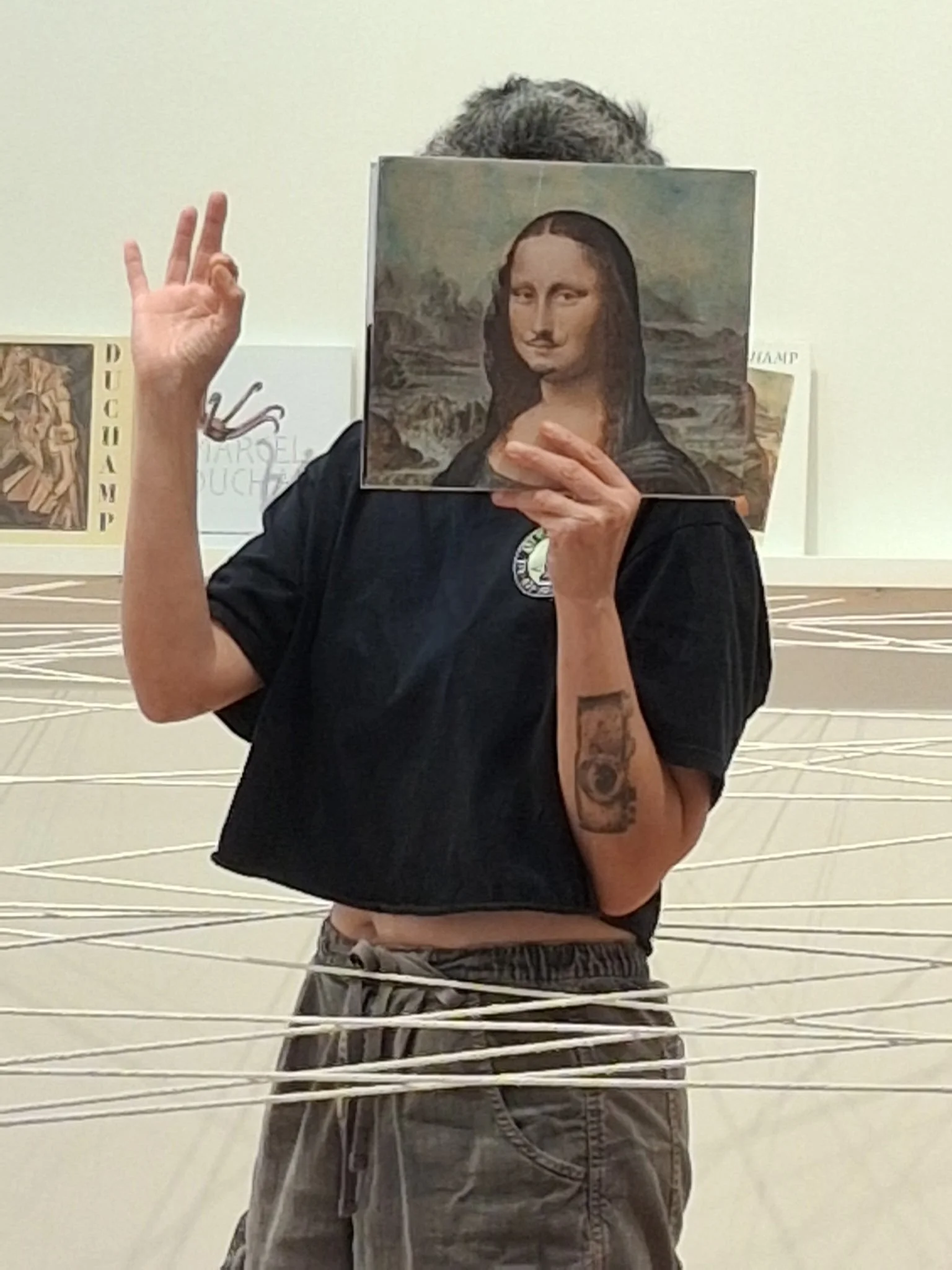
It was also in Buenos Aires, that Duchamp came in contact with a book, Textos Eroticos del Rio de la Plata, a book where Lehman Nitsche found an ironic account of pornographic graffiti and sexual acronyms SPQR (señoras putas queremos rabanos) in a Buenos Aires’ men’s public bathroom. Hence, a link to Duchamp’s Mona Lisa’s mustache and title, LHOOQ.
According to Antelo, Duchamp’s love for optical instruments was also inspired in the land of the Rio de la Plata. As I am listing these seminal Duchamp pieces linked to his Argentinean venture, I would like to turn to my serendipitous meeting with Mary Ellen Carroll, as she recited in Spanish, a text written for a performance titled, “Nothing” in March 2006. Mary Ellen traveled to Buenos Aires from New York with nothing but a passport, invited to perform anything she wanted at the Teatro de la Torre in Pinamar. Obviously, the Argentinean audience expected an all-American artist, who would present herself in English. But, Mary Ellen, learned an entire essay titled “You” or “Tu” written by Anthony Elms, translated into Spanish by Jacqueline Terrassa, performing it in their language: Spanish. Her brilliant performance not only perplexed the audience… its deeper cultural implications linger on. I was there to witness it!
From this point on, I decided to follow MEC’s trajectory as closely as I could. It did not take long for me to realize that MEC’s works are also grounded in exploring cultural paradigms. In our contemporary world, the material MEC chooses to work with are systems, invisible systems that underlie our thinking, our laws, our customs, our social conventions, our technological accouterments, our urban environment, our politics, networks that go unscathed but that determine our lives on so many levels… If you study MEC’s prodigious number of performances, produced over a 40-year career, you will be surprised by the daring, meticulous decisions and connections her work entails. Every one of her pieces mirrors a surprised, unaware, at times confrontational audience. Curiously, her work, as well as Duchamp’s, is completed by the audience’s response, however, neither Mary Ellen, nor Duchamp consciously provoke it. Both simply conceive a triggering strategy, discounting expectations of any sort. In fact, as Duchamp would put it, with a “laissez faire” ease, humor and indifference.
During my subsequent secret meetings with Mary Ellen, I told her I wanted to become a silent observer, or ethnographer of some of her works, and she graciously allowed me to follow her, so I could witness the after-effect of her pieces, amused at the obvious revelation of who the OTHER really is.
When MEC decided to personify a key note speaker at an art historians’ and critics’ national conference, the frustrated audience did not recognize that they were witnessing a performance, and in their blind rage, they now force every participant in future conferences to sign an affidavit that states that “you are who you say you are”…!! Duchamp laughs here, at a re-play of the ironic “denouement” around his urinal.
MEC staged a five-course dinner with twelve city leaders so they could exchange ideas on issues dealing with the city, but instead, the guests only talk about themselves in a narcissistic rapture, caught by lights and rolling film cameras.
MEC worked for ten years to rotate a house 180 degrees in a residential neighborhood, so it faced a public park behind it, turning a private property into a public one. The performance took a decade to be accomplished, after countless restrictive bureaucratic impediments, in a city that boasts of having no zoning laws. Furthermore, MEC was confronted by a community that forced her to destroy the house, since, after Hurricane Harvey in 2017, insurance also deemed the house unsalvageable. As a response, MEC conducted a choreographed demolition, piece by piece, with an excavator, performing the gutting for an invited audience, while the uninvited neighbors stood on their roofs to watch MEC’s performance.
The irony goes on… MEC got permission to film the North and South façade of an iconic modernist Federal Building, termed as an “embodiment of bureaucracy”, during 24 hours of the day by simultaneous two camera crews. This was a 24-hour surveillance of an institution dedicated to surveillance. The 24-hour film is shown in its entirety in movie theatres, but those who actually saw all of the 24 hours of the film were the FBI agents, who had to vet the material before it could be screened.
In another performance, when MEC is audited by the IRS, she records the entire exchange between herself and the IRS agent. She translates the transcript of the recording into Spanish and presents it as a performance in an art venue. It is offered to the public at large. Noone but the IRS agents come, to see if the transcript is really what it is supposed to be.
I think by now you get my point:
If Marcel Duchamp came back to life, he would come back as Mary Ellen Carroll. But, oh… he would be so surprised this time around, to be working so much… no more time to play chess, or just “breathe”…
Living at a full speed and with total intensity is what MEC, alias
Re-Duchamp is all about.
Monique Delusier
BIOGRAPHY
Said to have died in Kazakhstan while doing research for an exhibition, Delusier left detailed instructions for several exhibitions including this one, adding a last wish to have her ashes dispersed in Zurich where Cabaret Voltaire once stood. Instead, Monique Delusier seems to be MIA: people have sighted her with young companions jovially carrying on in noted cafes all over the world.
Video by Beatriz Bellorín